

“I hold my shoulders exactly like my mum did. I get the same worried stomach my grandmother had. I’m anxious about things that haven’t even happened yet, just like three generations before me. How much of my stress is actually mine?”
This realisation from my client Deshane changed everything for him. He’d tried therapy, medication, lifestyle changes for years without lasting relief. Nothing worked until he explored the stress patterns passed down through his family like inherited furniture.
Understanding Inherited Stress Patterns
Your family didn’t just give you your eye colour and height. They also passed down nervous system patterns, coping strategies, and unresolved trauma responses. The field of epigenetics shows us something remarkable: trauma and chronic stress can actually change how genes are expressed, and these changes can be passed down to children and grandchildren.
Your MAOA variants play a crucial role here. This gene affects how your brain processes neurotransmitters involved in stress response. Depending on your variants, you might be more or less resilient to inherited stress patterns.
As Carl Jung once said, “The greatest burden a child must bear is the unlived life of its parents.” Your body carries not just your family’s survival strategies, but also their unprocessed emotions and incomplete healing.
Pattern 1: Your Body Holds Their Hypervigilance
What it looks like: You scan for danger even in safe environments. Your shoulders live near your ears. You startle easily. You have trouble relaxing because some part of you is always ‘on guard.’
What’s inherited: Your family’s survival strategies from times when hypervigilance was necessary for safety. This might come from experiences of war, poverty, immigration, discrimination, or family trauma that required constant alertness.
The genetic piece: Your MAOA variants influence how efficiently your nervous system processes stress neurotransmitters. If you inherited both stress patterns and slower MAOA variants, the hypervigilance might be more intense.
How it shows up in your body:
- Chronic muscle tension, especially in shoulders, neck, and jaw
- Difficulty sleeping or staying asleep
- Heightened startle response to sudden noises
- Digestive issues related to chronic stress activation
- Fatigue from your nervous system working overtime
Deshane’s hypervigilance came from his grandfather who had survived repression and violence. His mother inherited this constant alertness, and Deshane found himself checking locks multiple times and feeling anxious about unlikely scenarios.
What your body needs: Gentle practices that teach your nervous system that vigilance can be temporary rather than permanent.
Pattern 2: Your Emotions Mirror Their Unprocessed Feelings
What it looks like: You feel emotions that seem too big for the situation. You might get overwhelmingly sad about losses that aren’t yours, or anxious about problems that belong to other people. You carry guilt, shame, or fear that doesn’t match your actual experiences.
What’s inherited: Emotions that your family members couldn’t fully process or express. Children’s nervous systems are like emotional sponges, absorbing and storing feelings that the adults around them can’t handle.
The MAOA influence: Your genetic variants affect how sensitive you are to others’ emotional states and how intensely you experience inherited emotional patterns.
How it manifests:
- Feeling responsible for others’ happiness or emotional state
- Overwhelming sadness or anxiety that seems to come from nowhere
- Physical symptoms that match family members’ emotional patterns
- Carrying guilt about things you didn’t do
- Feeling “too much” emotion compared to others around you
Deshane’s grandmother never grieved her losses because she had to focus on survival. His mother carried this unprocessed grief as chronic depression. Deshane found himself feeling inexplicably sad, especially during times that should have been happy.
What your body needs: Permission to feel and release emotions that don’t belong to you.
Pattern 3: Your Body Recreates Their Survival Strategies
What it looks like: You automatically respond to stress the same way your family did, even when these strategies don’t serve your current situation. You might overwork like your parents did, or shut down like your grandparents, or become hyper-controlling like your caregivers.
What’s inherited: Specific nervous system responses that helped your family survive difficult circumstances. These strategies were adaptive for their situations but might be maladaptive for yours.
Common inherited strategies:
- Overworking: If your family survived through constant productivity
- People-pleasing: If safety came through keeping others happy
- Emotional shutdown: If showing feelings wasn’t safe
- Hyper-control: If unpredictability felt dangerous
- Self-sacrifice: If your family’s survival required giving up personal needs
Deshane’s family survived poverty through obsessive saving. Deshane found himself unable to enjoy financial stability, always preparing for catastrophe that wasn’t coming.
What your body needs: New experiences of safety that allow different responses to emerge.
How MAOA Variants Affect Inherited Patterns
Your MAOA gene influences how your nervous system processes inherited stress patterns:
Slower MAOA variants might experience:
- More intense inherited emotional patterns
- Difficulty clearing stress neurotransmitters
- Stronger physical manifestations of family stress
- Need for more support in transforming inherited patterns
Faster MAOA variants might experience:
- More resilience to inherited stress patterns
- Easier recovery from family trauma responses
- Less intense physical manifestations
- More flexibility in creating new patterns
Understanding your variants helps explain why inherited patterns might affect you differently than they affected your siblings.
Breaking the Cycle with Compassion
Don’t view healing inherited stress patterns as rejecting your family or their survival strategies, by understanding what served them in their circumstances and choosing what serves you in yours can bring compassion and peace.
When you heal inherited stress patterns, you’re not just healing yourself, you’re potentially changing what gets passed down to future generations. The same epigenetic mechanisms that transmitted stress can also transmit healing and resilience.
Deshane’s transformation showed this ripple effect. As he learned to recognise and gently shift his inherited anxiety patterns, his relationship with his ageing mother improved, his own children began showing less anxiety because his nervous system was modelling a different way of being.
Practical steps for transformation:
- Awareness: Notice when your body responses feel disproportionate to current reality
- Differentiation: Learn to distinguish between your authentic responses and learned family patterns
- Compassion: Hold space for your family’s survival strategies whilst choosing what serves your current life
- Integration: Create new patterns whilst honouring the strength that family patterns provided
Creating New Family Patterns
Your body carries your family’s survival story, but it doesn’t have to be limited by it. You can honour your ancestors’ strength whilst writing a new chapter of healing and resilience.
Every time you choose a regulated response over an inherited stress pattern, you’re creating new neural pathways. Every time you process an emotion instead of storing it, you’re preventing it from being passed down.
Your body knows the difference between inherited stress and present-moment stress. Learning to listen to this wisdom is one of the most powerful healing tools available to you.
Transform Your Family Legacy
If you’re recognising inherited stress patterns in your body and want support in honouring your family’s survival strength whilst creating new patterns that serve your life, The Happy Reset 3-Step Process provides gentle, effective approaches to intergenerational healing
What Steps Do I Take Next?
Download my free Nervous System TOOLKIT – A helpful resource you can take anywhere
Book a Discovery Call HERE – If you’re ready to dive deeper into your personal Happy Reset blueprint
If you’re a HR manager or Executive looking for high-tier coaching – Take a look at the WORKPLACE RESET page to get support for your teams and employees
If you’d like to book me for your event, keynote or podcast – Fill out this FORM
Remember: Your family’s stress patterns aren’t your destiny, they’re your starting point, and you have the power to transform inherited survival into inherited healing.
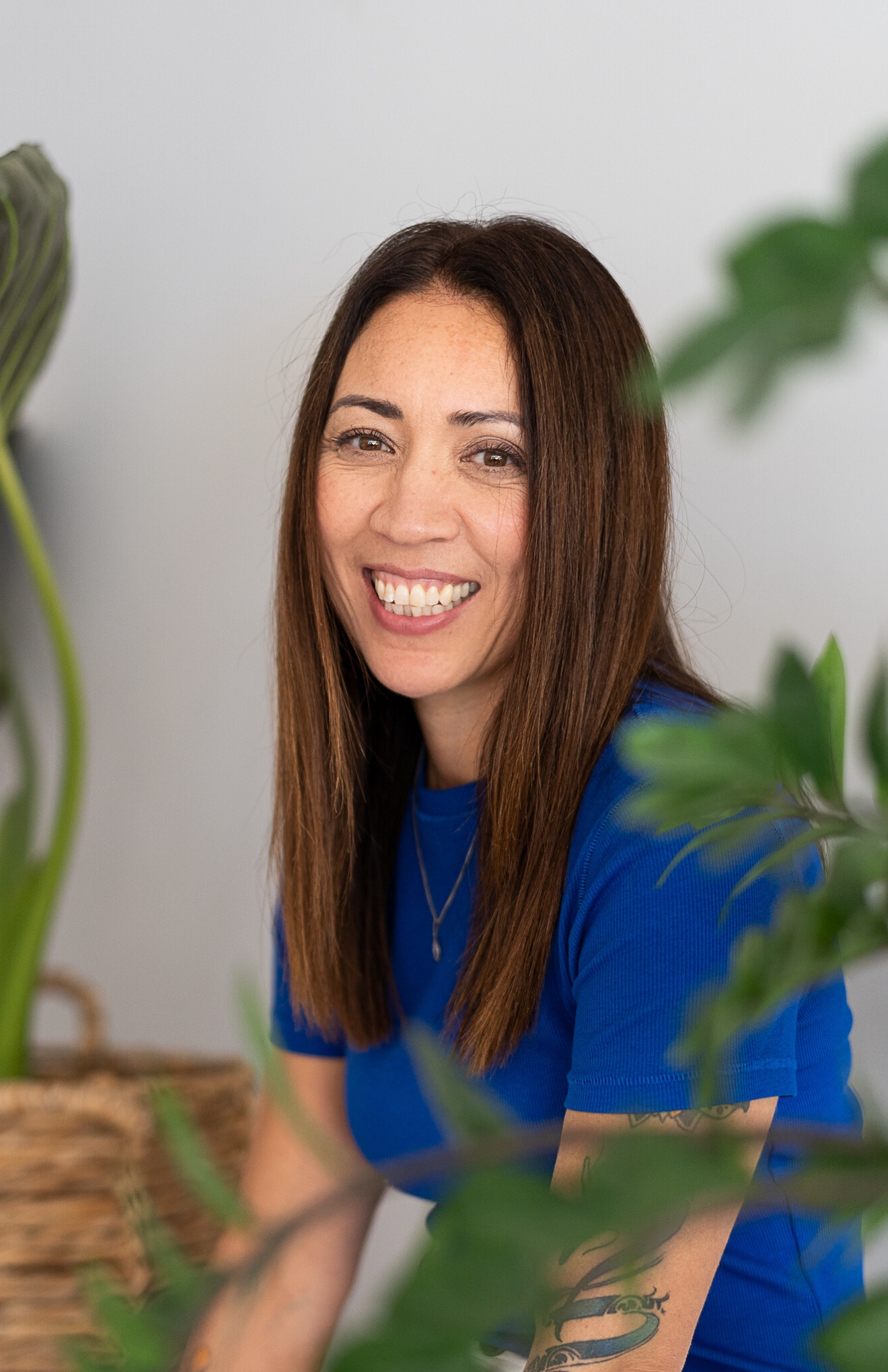
I am the founder of The Happy Reset and an integrative wellbeing practitioner specialising in nervous system health, anxiety, intergenerational trauma patterns, women’s health, and nutrigenomics. My mission is to help you move beyond ‘overriding’ your body and start understanding the messages behind your symptoms.
My Expertise & Qualifications: With over 20 years of experience in community-based settings and corporate wellness, I bridge the gap between complex science and lived experience. I am a:
Member of BAATN – The Black, African and Asian Therapy Network.
Member of ACCPH – Accredited Counsellors, Coaches, Psychotherapists and Hypnotherapists.
International Certified Brainspotting Practitioner – Phases 1-4, Group Brainspotting and Masterclass.
Certified TRE® Provider – Tension & Trauma Release Process, and member of TRE International.
Healing Diets Coach – with a specialism in Nervous System Nutrigenomics
Functional Fitness Coach – Level 4 and UK Athletics Coach
With an Integrative Approach to Healing – I work with individuals and groups who feel wired, depleted, or disconnected – often as a result of chronic stress, hormonal shifts, chronic fatigue, or inherited family patterns. My approach is deeply personal, shaped by my own journey through developmental trauma, medical intervention, menopause, and professional burnout.
By combining trauma-informed movement, genetics, and body-led practices, I translate complex physiological concepts into grounded, accessible insights you can use in daily life.
Speaking & Impact: I am a featured facilitator and speaker at Transform Trauma (The world’s largest trauma conference), The Therapy Show, and various festivals.
Written for Liz Earle Wellbeing and have delivered workshops and events for global organisations such as GE Healthcare, GE Power and Kiddylicious.
Based in Beaconsfield and London, I offer education and resources online and in-person through The Happy Reset – designed to support sustainable change across mind, body, and nourishment.
Learn More about services: Brainspotting | Trauma Release | Nutrigenomics
Connect with me on LinkedIn | Explore nervous system resources on YouTube