

There’s a kind of anxiety that has a way of slipping in so subtly that you almost don’t register it’s there until you step back and realise how much background noise it’s been creating. It’s the sort that settles into your bones bit by bit, shaping your responses and reactions in ways that become so familiar, so habitual, that they start to feel like part of who you are.
And often it’s not until you reach a certain point, maybe in your late 30s or 40s or 50s, that you begin to see how much of your energy is being channelled into just keeping a lid on it all. You start noticing these little tells – the way your breath keeps catching slightly in your chest, how your fingers are always finding something to fidget with, the fact that your mind seems to kick into overthinking mode at the slightest provocation. It’s like your whole system is constantly bracing itself, even when there’s nothing obviously stressful happening.
The physical signals that anxiety is present
One of the funny things about this kind of undercurrent of anxiety is how physical it is, right from the start. It tends to announce itself first through the body, often long before your mind has cottoned on to what’s happening. So you might find yourself clenching your jaw without realising it, until the tension starts creeping up into your temples and you’re wondering where this low-grade headache came from. Or maybe it’s that your shoulders are somehow up around your ears again, even though you could have sworn you just reminded yourself to relax them a moment ago.
There’s a whole host of these little physical markers that are so easy to miss in the moment, but that are often a sign that your nervous system is stuck in a state of hyper-vigilance, constantly scanning for the next thing that might go wrong. And the tricky part is that the longer you stay in that state, the more normal it starts to feel, to the point where it can be hard to remember what it’s like to fully exhale, to really let your guard down.
The impact of stress hormones and nervous system patterns
What’s often happening beneath the surface in these moments is that your body is getting stuck in these loops of stress hormone activation, where cortisol and adrenaline are being pumped out at the slightest provocation, flooding your system and keeping you on high alert. And if there’s no real threat to burn off that excess energy, it just keeps circulating, looking for an outlet.
Over time, that takes a toll on all your body’s systems – your digestion gets disrupted, your sleep cycles are thrown off, even your immune function starts to suffer. And because these stress response patterns are often laid down early in life, through experiences of overwhelm or trauma or chronic stress, they can become so deeply grooved that they start to feel like a part of your identity, shaping your sense of what’s possible for you and how much ease and calm you can expect to feel.
The ancestral origins of our stress responses
There’s an evolutionary angle to all of this as well, because so many of these hair-trigger stress responses that can feel so unmanageable in modern life actually have their roots in these really ancient, primal survival strategies that kept our ancestors safe in a world full of genuine, physical threats.
So that tendency for your heart to start racing at the first sign of conflict, or for your digestion to shut down when you’re under pressure – those were actually highly adaptive responses for humans living in an environment where any unfamiliar sound or sensation could mean imminent danger. The problem is that now, those same responses are getting triggered by an overflowing inbox or a tense conversation with a colleague, leaving us stuck in this constant state of physiological preparedness for crises that never actually arrive.
How anxiety can shape our identities and behaviours
What’s fascinating to me is how much these patterns of anxiety and stress activation can shape not just our moment-to-moment experiences, but also these much deeper layers of our identity and sense of self. Because when you’ve spent years or even decades living with this constant background hum of anxiety, it can start to feel like that’s just who you are – the worrier, the overthinker, the one who’s always bracing for the worst.
And those identities can become self-perpetuating in a way, because we start to make choices and engage in behaviours that reinforce those same patterns – putting off that difficult conversation because we’re so sure it’ll go badly, or taking on way too much because we’re convinced that we need to be constantly proving our worth. It becomes this feedback loop where our beliefs about ourselves shape our actions, which then generate more experiences that confirm those same limiting beliefs.
Cultivating a new relationship with anxiety
So how do we start to shift out of those loops? For me, a lot of it comes down to learning how to cultivate a new relationship with the anxiety itself. Instead of seeing it as this enemy to be eliminated or pushed away at all costs, we can start to approach it with a bit more curiosity and compassion.
That might mean taking a moment to notice where and how it’s showing up in the body, and experimenting with giving it just a little bit of space – letting that knot in your stomach be there without immediately trying to distract yourself from it, or allowing yourself to feel the racing heartbeat without forcing yourself to take deep breaths. It’s a practice of learning to be with the discomfort, just for a moment, without needing to fix or change it right away.
The power of small, somatic practices
And what’s amazing is that over time, those small moments of allowance and acceptance can start to create these little micro-shifts in how your nervous system responds to stress and anxiety. Each time you’re able to sit with the sensation without immediately contracting away from it, you’re sending this gentle signal to your body that it’s safe to let down its guard a little, that it doesn’t need to be so tightly braced against the world.
And the more you’re able to do that, the more those new patterns start to become ingrained – your default shifts away from constant tension and towards a bit more ease and adaptability. It doesn’t happen overnight – this is very much a practice, and an ongoing one at that. But each time you’re able to meet your anxiety with a bit more softness and openness, you’re planting a seed for a different way of being.
Finding support on the path of healing
Of course, learning to be with anxiety in this way is rarely a straightforward or linear journey. For most of us, it requires a lot of support, whether that’s through working with a somatic practitioner or finding a community of others who are on a similar path.
What I’ve found in my own work is that there’s something incredibly powerful about having a space where you can start to explore these patterns and sensations in a way that feels safe and held, where you can begin to experiment with new ways of responding to anxiety without feeling like you have to do it all on your own. It’s a process of gradually building up a toolkit of practices and strategies that work for you, whether that’s particular breathwork techniques or types of movement or just a general orientation of kindness towards whatever’s arising.
And the beauty of this approach is that it’s not about fixing yourself or getting rid of anxiety altogether – it’s about learning to dance with it a bit, to create more space and flexibility in how you respond to it, so that over time, its grip on you begins to loosen. It’s a radically different way of relating to the parts of ourselves that we’ve long seen as broken or problematic, and in my experience, it’s where the real alchemy of transformation starts to happen.
If you’re curious to explore how this might look in your own life, I’d love to invite you to reach out. Because this path of coming home to yourself and finding a new way to be with all the messy, tender, glorious parts of you – it’s not one that’s meant to be walked alone.
Download my free Nervous System TOOLKIT – A helpful resource you can take anywhere
Book a Discovery Call HERE – If you’re ready to dive deeper into your personal Happy Reset blueprint
If you’re a HR manager or Executive looking for high-tier coaching – Take a look at the WORKPLACE RESET page to get support for your teams and employees
If you’d like to book me for your event, keynote or podcast – Fill out this FORM
Remember – When the mind remembers a challenge or trauma, the body will always react in some way no matter how small. That felt sense can be the beginning to a gate opening. It’s up to you how wide you leave it open and for how long
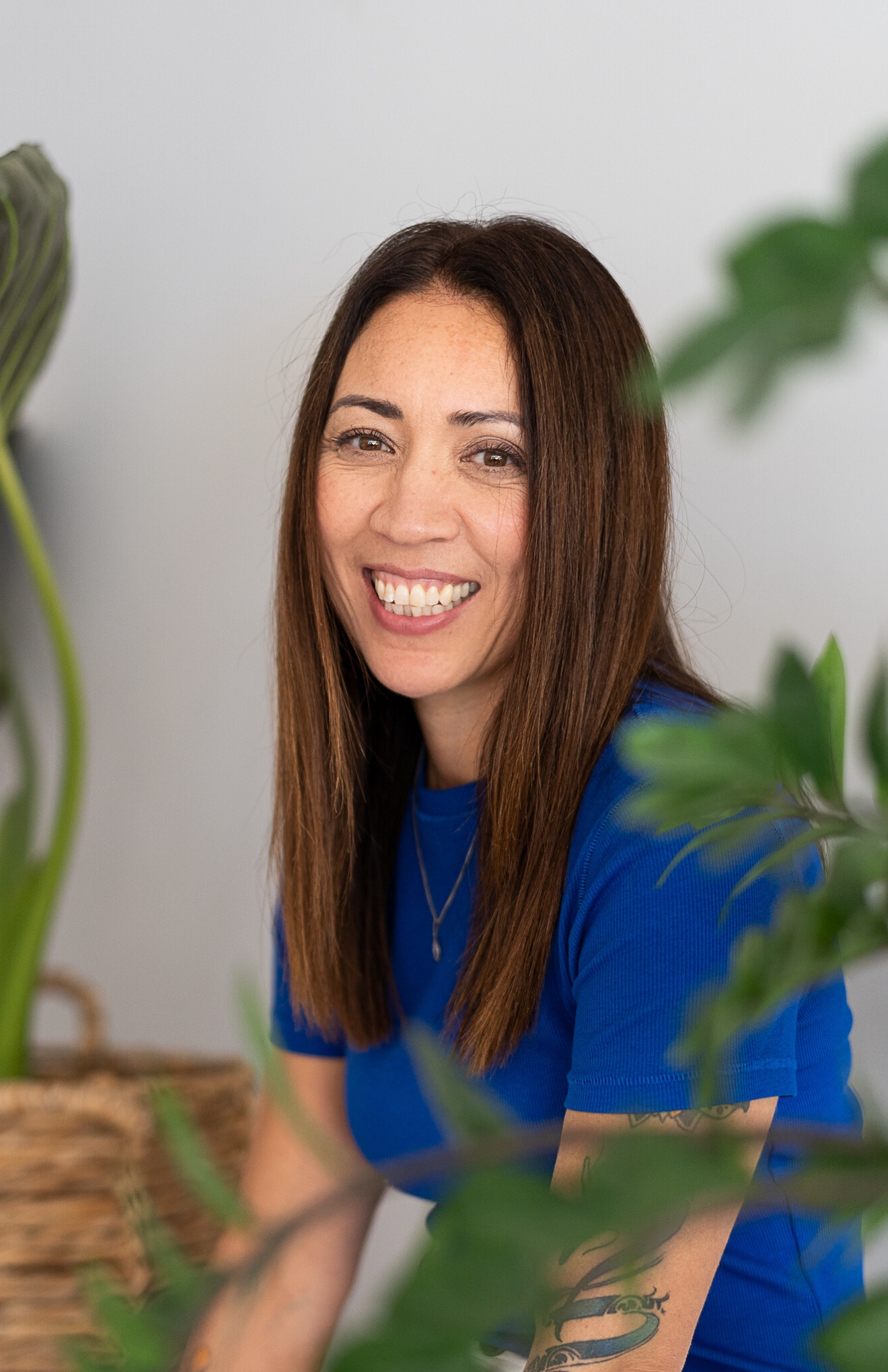
I am the founder of The Happy Reset and an integrative wellbeing practitioner specialising in nervous system health, anxiety, intergenerational trauma patterns, women’s health, and nutrigenomics. My mission is to help you move beyond ‘overriding’ your body and start understanding the messages behind your symptoms.
My Expertise & Qualifications: With over 20 years of experience in community-based settings and corporate wellness, I bridge the gap between complex science and lived experience. I am a:
Member of BAATN – The Black, African and Asian Therapy Network.
Member of ACCPH – Accredited Counsellors, Coaches, Psychotherapists and Hypnotherapists.
International Certified Brainspotting Practitioner – Phases 1-4, Group Brainspotting and Masterclass.
Certified TRE® Provider – Tension & Trauma Release Process, and member of TRE International.
Healing Diets Coach – with a specialism in Nervous System Nutrigenomics
Functional Fitness Coach – Level 4 and UK Athletics Coach
With an Integrative Approach to Healing – I work with individuals and groups who feel wired, depleted, or disconnected – often as a result of chronic stress, hormonal shifts, chronic fatigue, or inherited family patterns. My approach is deeply personal, shaped by my own journey through developmental trauma, medical intervention, menopause, and professional burnout.
By combining trauma-informed movement, genetics, and body-led practices, I translate complex physiological concepts into grounded, accessible insights you can use in daily life.
Speaking & Impact: I am a featured facilitator and speaker at Transform Trauma (The world’s largest trauma conference), The Therapy Show, and various festivals.
Written for Liz Earle Wellbeing and have delivered workshops and events for global organisations such as GE Healthcare, GE Power and Kiddylicious.
Based in Beaconsfield and London, I offer education and resources online and in-person through The Happy Reset – designed to support sustainable change across mind, body, and nourishment.
Learn More about services: Brainspotting | Trauma Release | Nutrigenomics
Connect with me on LinkedIn | Explore nervous system resources on YouTube